Introduction
The term "high fidelity" became popular in the 1950s when advancements in audio technology made consumers enjoy better sound quality at home. The introduction of vinyl records, stereo systems, and improved amplifiers marked the beginning of the HiFi era.
Over the decades, HiFi evolved from turntables and tube amplifiers to include CDs, digital streaming services, and modern high-resolution audio formats. Today, HiFi continues to attract music enthusiasts who value authentic and detailed sound reproduction.
In audio, fidelity means "faithfulness" to the original sound. A high-fidelity system reproduces music accurately without altering the recording. This means clearer vocals, more detailed instruments, balanced frequencies, and reduced distortion compared to conventional audio systems.
HiFi equipment is designed to deliver music as close as possible to the original recording. Whether you're listening to classical music, rock, or movie soundtracks.
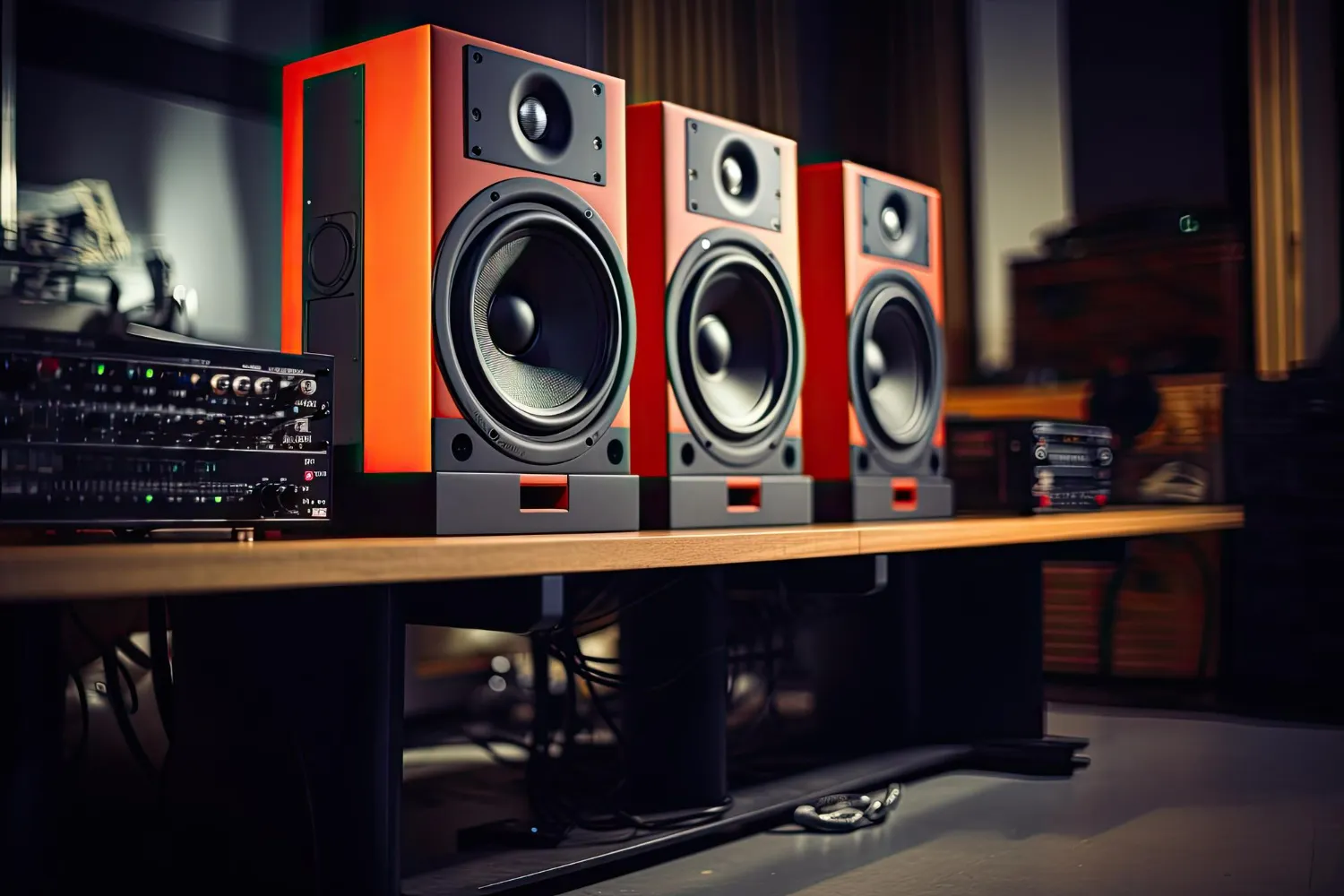
What Is High-Fidelity (Hi-Fi) and Why Does It Matter
The term "HiFi" stands for "High Fidelity," which refers to the accurate reproduction of sound with minimal distortion, noise, and loss of detail. The goal of HiFi audio is to reproduce music or other audio content as close as possible to the original recording, allowing listeners to experience sound the way artists and sound engineers intended.
A true HiFi system delivers a full and accurate range of audible frequencies, preserving the depth, clarity, and balance of the recording. Unlike standard audio systems that may compress or alter sound quality, HiFi setups prioritize true-to-source performance.
In simple terms, HiFi is about creating an audio experience so realistic that the difference between a live performance and a recording becomes difficult for the human ear to detect.
Why Does It Matter
You might wonder, "Does HiFi really make a difference in everyday listening?" The answer is yes. HiFi isn't reserved for audiophiles or people who only listen to classical music. Whether you're enjoying the powerful bass in electronic tracks, the emotion in a singer's voice, or the excitement of a live concert recording, a high-fidelity system helps you hear more of what was originally captured in the studio. Because the sound is clearer and more balanced, your ears and brain don't have to work as hard to process the music, reducing listening fatigue and making long listening sessions more enjoyable.
1. Accuracy and Clarity
HiFi systems are designed to reproduce sound as accurately as possible. This means you can hear vocals, instruments, and subtle details with greater precision, allowing you to experience music the way the artist intended.
2. Dynamic Range
Dynamic range refers to the difference between the quietest and loudest sounds in a recording. A good HiFi system preserves these contrasts, letting you appreciate everything from soft acoustic passages to powerful orchestral climaxes without losing detail.
3. Low Distortion
One of the defining characteristics of HiFi audio is minimal distortion. Even at higher volumes, the sound remains clean and natural, ensuring your favorite tracks don't become harsh or unpleasant to listen to.
4. Wide Frequency Response
HiFi equipment reproduces a broad range of frequencies, from deep bass notes to delicate high frequencies. This creates a fuller and more balanced sound that closely resembles a live performance.
5. Detailed Sound Reproduction
With HiFi audio, you may notice details you've never heard before, such as the subtle resonance of a guitar string, the breath of a vocalist between lyrics, or background instruments that were previously masked. These small elements add depth and realism, transforming casual listening into a truly immersive experience.
What Are the Key Units You Need to Consider in a HiFi Setup
A HiFi system is made up of several components that work together to provide an accurate and immersive listening experience. One of the biggest advantages of HiFi is that you can build a setup that suits your lifestyle, music preferences, and budget. Whether you're a vinyl enthusiast, a streaming fan, or someone who enjoys a mix of both.
Sources: The Heart of HiFi
The source is where your music originates. This could be a turntable for vinyl records, a CD player, a network streamer, or even a smartphone connected to music streaming services such as Spotify, Apple Music, or Tidal. Choosing the right source depends entirely on how you prefer to listen to your favorite music. The flexibility of HiFi allows you to include only the components that match your listening habits.
- ● Streaming Services
- ● CD Players
- ● Turntables
- ● Network Audio Players
Amplifier: Powering Your Sound
The amplifier is the driving force behind your HiFi system. It receives the audio signal from the source and boosts it to a level that can power your speakers. In most setups, the amplifier also allows you to switch between sources and adjust the volume. From integrated amplifiers to separate pre-amplifier and power amplifier combinations, there are various options available to suit different performance needs and budgets.
- ● Integrated Amplifiers
- ● Stereo Amplifiers
- ● Tube Amplifiers
- ● Solid-State Amplifiers
Speakers: The Voice of Your System
Speakers are responsible for transforming electrical signals into the sound you hear. When choosing the best speakers, consider factors such as room size, placement options, and your personal listening preferences. Larger speakers are not always necessary — well-matched bookshelf speakers can often deliver exceptional sound quality in smaller spaces.
- ● Floorstanding Speakers
- ● Bookshelf Speakers
- ● Passive Speakers
Cables
Cables may seem like a small detail, but they play an important role in connecting all the components of your HiFi system. Interconnect cables carry audio signals between source devices and amplifiers, while speaker cables transfer the amplified signal to your speakers. Selecting quality cables of the appropriate length helps ensure a secure connection and reliable performance throughout your setup.
What Are the Differences Between Hi-Fi and Regular Audio
Both HiFi and regular audio systems help you enjoy music; however, they are designed with different goals. Regular audio systems prioritize convenience, affordability, and ease of use, whereas HiFi systems focus on reproducing sound as accurately as possible.
HiFi vs Regular Audio
| Feature | HiFi Audio | Regular Audio |
|---|---|---|
| Sound Accuracy | Produces audio as close to the original recording as possible. | Focuses on enjoyable sound rather than complete accuracy. |
| Distortion Levels | Designed to minimize distortion, even at higher volumes. | Distortion may become noticeable when played loudly. |
| Frequency Response | Offers a wider and more balanced frequency range. | Frequency response may be limited or emphasized in certain ranges. |
| Sound Detail | Reveals subtle details, textures, and background elements in recordings. | Fine details are often less noticeable. |
| Component Design | Uses separate, purpose-built components such as amplifiers, speakers, and source devices. | Often relies on all-in-one systems designed for simplicity. |
| Customization | Allows users to choose and upgrade individual components over time. | Limited upgrade options, with fewer customization possibilities. |
| Listening Experience | Creates a more immersive and lifelike soundstage with improved instrument separation. | Provides a satisfactory experience for everyday listening. |
| Signal-to-Noise Ratio | Engineered to maintain cleaner audio with lower background noise. | May have higher levels of noise interference. |
| Technical Standards | Traditionally associated with performance standards related to frequency response and distortion. | Not necessarily built to meet HiFi performance criteria. |
| Target Audience | Suitable for listeners who seek higher sound fidelity and a more engaging experience. | Users who prioritize convenience, ease of setup, and budget. |
How to Set Up HiFi Audio in Your Home
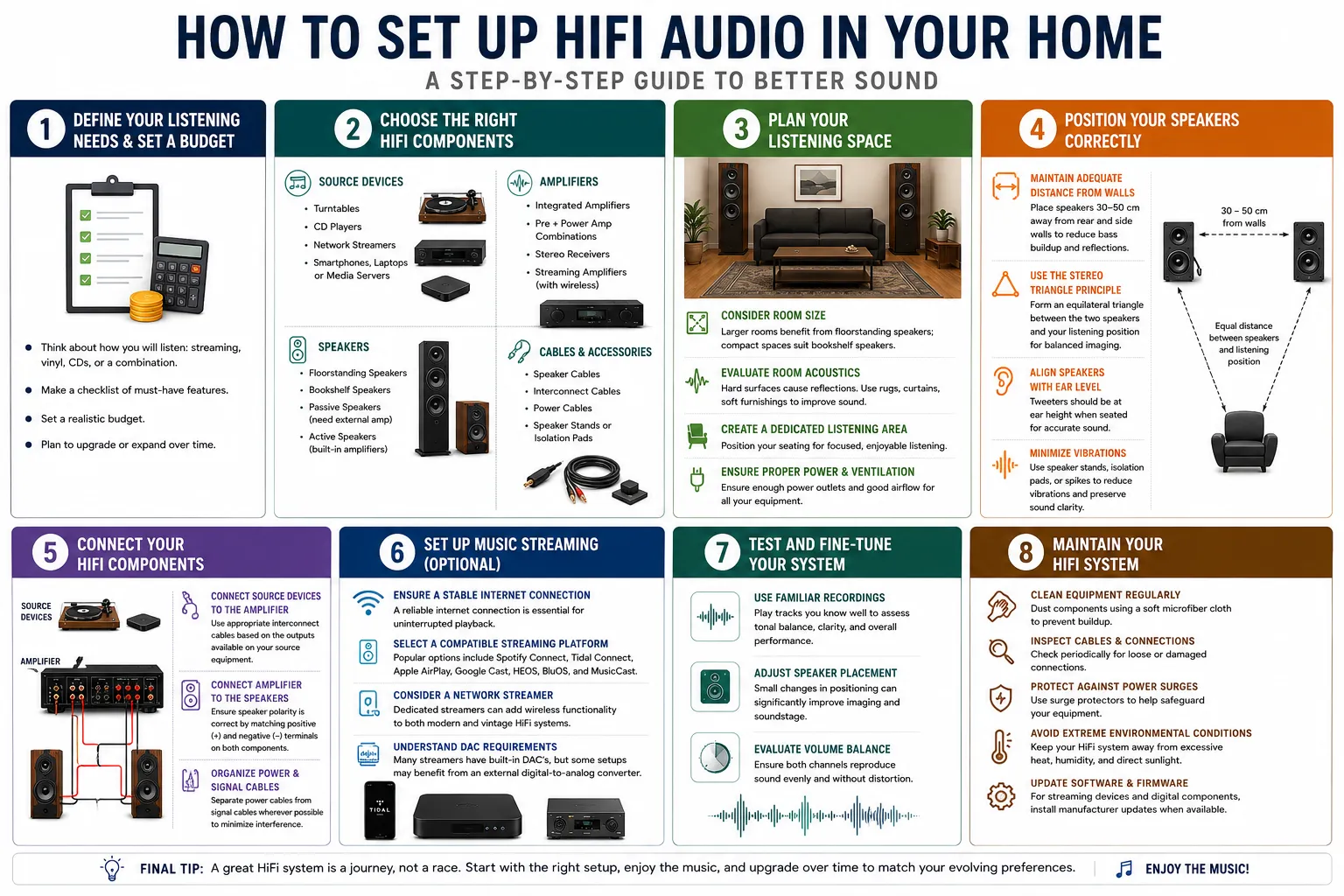
Step 1: Define Your Listening Needs and Set a Budget
Before purchasing any equipment, think about how you plan to use your HiFi system. Do you mainly stream music from your phone, enjoy vinyl records, listen to CDs, or want a combination of sources? Make a checklist of essential features and establish a realistic budget. Remember, you can always expand or upgrade your system over time.
Step 2: Choose the Right HiFi Components
A HiFi system can be customized based on your preferences, but most setups include the following components:
Source Devices
The source is where your music comes from. This could include:
- ● Turntables for vinyl enthusiasts.
- ● CD players for physical media collections.
- ● Network streamers for Spotify,Apple Music,Tidal or Qobuz.
- ● Smartphones, laptops, or media servers. .
Amplifiers
Amplifiers boost the audio signal so your speakers can reproduce sound effectively. Common options include:
- ● Integrated amplifiers
- ● Pre-amplifier and power amplifier combinations
- ● Stereo receivers
- ● Streaming amplifiers with built-in wireless capabilities.
Speakers
Speakers have the greatest influence on the sound you hear. Consider
- ● Floorstanding speakers for larger rooms
- ● Bookshelf speakers for smaller spaces
- ● Passive speakers that require external amplification
- ● Active speakers with built-in amplifiers.
Cables and Accessories
Reliable connections are essential for optimal performance. You may need
- ● Speaker cables
- ● Interconnect cables
- ● Power cables
- ● Speaker stands or isolation pads
Step 3: Plan Your Listening Space
Before setting up, consider room size and sound transparency. Larger rooms often benefit from floorstanding speakers, while compact spaces may be better suited to bookshelf speakers. Hard surfaces such as glass and tile can create unwanted reflections — soft furnishings like rugs, curtains, and upholstered furniture can help improve sound quality. Position your seating area to provide a focused listening experience without unnecessary distractions.
Step 4: Position Your Speakers Correctly
Place speakers approximately 30–50 cm away from rear and side walls to reduce excessive bass buildup and reflections. Position your speakers and listening seat in an equilateral triangle arrangement to create balanced stereo imaging. For the most accurate sound reproduction, the speaker tweeters should ideally be at ear height when seated. Use speaker stands, isolation pads, or spikes to reduce unwanted vibrations and preserve sound clarity.
Step 5: Connect Your HiFi Components
Use appropriate interconnect cables based on the outputs available on your source equipment. Ensure speaker polarity is correct by matching positive and negative terminals on both components. Separate power cables from signal cables wherever possible to minimize interference.
Step 6: Set Up Music Streaming (Optional)
If you plan to stream music, a reliable internet connection is essential for uninterrupted playback. Popular streaming options include Spotify Connect, Tidal Connect, Apple AirPlay, Google Cast, HEOS, BluOS, and MusicCast. Dedicated streamers can add wireless functionality to both modern and vintage HiFi systems. Many streamers have built-in DACs, but some setups may benefit from an external digital-to-analog converter.
Step 7: Test and Fine-Tune Your System
Play tracks you know well to assess tonal balance, clarity, and overall performance. Small changes in speaker positioning can significantly improve imaging and soundstage. Ensure both channels reproduce sound evenly and without distortion.
Step 8: Maintain Your HiFi System
Dust components using a soft microfiber cloth to prevent buildup. Check periodically for loose or damaged connections. Use surge protectors to help safeguard your equipment. Keep your HiFi system away from excessive heat, humidity, and direct sunlight. For streaming devices and digital components, install manufacturer updates when available.
Also go through our new article, Top 12 Mistakes To Avoid While Setting Up a Home Theatre.
Conclusion
HiFi audio is more than just premium equipment — it's about experiencing your favorite music with greater clarity, detail, and emotion. Whether you're building your first stereo setup or upgrading an existing system, from selecting the right source and amplifier to choosing speakers and optimizing room acoustics, every component plays a role in delivering exceptional sound quality. If you're ready to begin your HiFi journey, HomeConnect Cinemas is here to help. Our team can guide you in choosing the right HiFi components, designing a system that suits your lifestyle, and ensuring professional installation for the best possible performance.