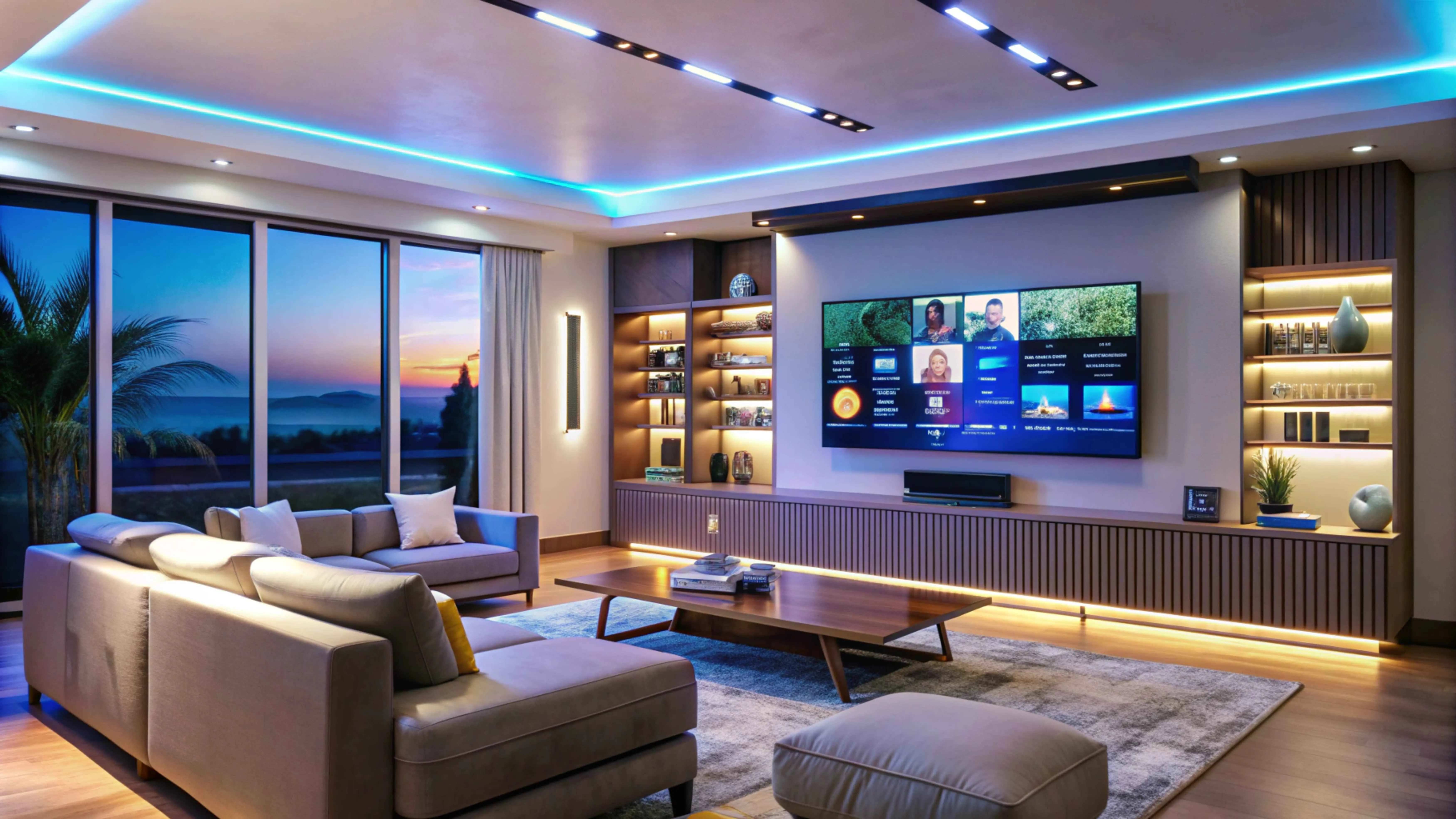
A home theatre is built around three essential elements:
- • A large screen for detailed picture quality and surround sound speaker arrangement that distributes audio from multiple directions.
- • Media sources that provide content such as movies, shows, or games.
- • These components work together to create a more engaging and realistic viewing experience compared to standard TV setups.
What truly defines a home theatre is not just the equipment, but the way everything is to enhance immersion. With properly placed speakers, balanced acoustics, and high-resolution visuals, it transforms everyday entertainment into a theatre-like environment.
What are the Benefits of a Home Theatre System
Investing in a home theatre system offers numerous advantages that go beyond just watching movies. Here are the top benefits:
1. Cinematic Experience in Your Own Home
- Enjoy an atmosphere like a theatre with immersive sound and large-screen visuals from your living space.
2. Superior Sound Quality
- Experience clear and directional audio that enhances every scene with depth and realism.
3. Better Visuals
- Advanced technologies provide sharper images and vibrant colors.
4. Enhanced Gaming Experience
- Play games with dynamic sound effects and detailed visuals.
5. Family-Friendly Entertainment
- Create a shared entertainment space perfect for movies, shows, and family time.
6. Customizable Setup
- Alter system layout and components to match your room size and preferences.
7. Cost-Effective in the Long Run
- Reduce frequent theatre visits by enjoying premium entertainment at home.
8. Increased Home Value
- A well-designed home theatre setup can enhance the overall appeal and value of your property.
9. Multi-Purpose Usage
- Use the system for movies, music, gaming, sports, and even presentations.
10. Convenience and Comfort
- Enjoy high-quality entertainment anytime without leaving the comfort of your home.
What are the Types of Home Theatre Speaker Systems
Choosing the right speakers is crucial for the audio experience. Here are the common types available:
- • Floor-standing Speakers
- • Bookshelf Speakers
- • Center Channel Speakers
- • Main Left and Right Speakers
- • Surround Sound Speakers
- • Left and Right Surround Sound Speakers
- • Atmos Height Speakers
- • Subwoofers
- • Satellite Speakers
- • Wall-mounted Speakers
- • In-Ceiling & In-Wall Speakers
- • Tallboy Speakers
- • Compact Speakers
- • Sound Bars / Speaker Systems
If you want to explore our new products, visit: https://www.homeconnectcinemas.com/products.html.
What are the Key Components of a Home Theatre System
A home theatre system works effectively because of main components function together to deliver a seamless audio-visual experience. While setups can change, most systems are built around a few essential elements that ensure both high-quality visuals and immersive sound.
1. Amplifier
The amplifier (or AV receiver) is the central hub of a home theatre system that processes audio signals and powers the speakers. It ensures balanced sound output, manages multiple inputs, and synchronizes audio with video for a seamless viewing experience.
2. Front, Rear, and Center Speakers, and Subwoofer
These speakers work together to create immersive surround sound. Front and center speakers handle dialogue and main audio; rear speakers add depth and directional effects, while the subwoofer delivers powerful bass for a cinematic feel.
3. Screen / TV or Projector
The display unit is for visual output, with options like high-resolution TVs or projectors offering large, detailed images. Features such as 4K resolution, HDR, and screen size will impact the overall viewing experience.
4. Playback Devices / Media Players
These devices provide the content for your system, including streaming devices, Blu-ray players, gaming consoles, or set-top boxes. They ensure access to movies, shows, and other entertainment in high quality.
5. Connections and Cables
Cables and connectivity options such as HDMI, optical, or wireless connections are essential for transmitting audio and video signals between components without loss of quality.
6. Controls and Features
Modern home theatre include smart controls like remote access, mobile apps, voice assistants, and advanced features such as Dolby Atmos or Bluetooth connectivity for convenience and performance.
7. Additional Accessories
Accessories like wall mounts, acoustic panels, lighting control, and comfortable seating can further enhance the setup by improving sound quality, aesthetics, and overall viewing comfort.
How Does a Home Theatre System Work?
A home theatre system works by processing audio and video signals and distributing them across multiple components to create an immersive viewing and listening experience. Here’s a clear and accurate breakdown:
- • Input Signal Reception: Content is delivered from source devices such as a smart TV, streaming device, gaming console, or Blu-ray player.
- • Audio Decoding: The AV receiver processes and decodes advanced audio formats like Dolby Digital or DTS into separate sound channels.
- • Signal Distribution: The decoded audio channels are directed to specific speakers for example, dialogue to the center speaker and background effects to surround speakers.
- • Amplification: The receiver or amplifier boosts the audio signals to check clear and distortion-free sound output.
- • Speaker Output: Each speaker plays a different role: Front speakers handle main audio and music; center speaker delivers dialogue; surround speakers create ambient effects; a subwoofer produces deep bass.
- • Surround Sound Experience: By distributing sound in multiple directions, the system creates a realistic, cinema-like environment where audio feels natural and immersive.
- • Video Output & Connectivity: The display (TV or projector) shows high-quality visuals, while connections like HDMI or wireless technology ensure smooth transmission between all components.
This allows a home theatre system to transform regular content into a rich, theatre like experience at home.
How is home theatre sound recorded and replayed?
Home theatre sound is recorded using multiple microphones and channels in studios to capture dialogue, background effects, and ambient sounds. This multi-channel audio is then encoded into formats like Dolby Digital or DTS, which preserve directional sound information.
When the system is played back, the AV receiver decodes these audio formats and separates them into individual channels. Each channel is sent to specific speakers, such as the center speaker for dialogue, surround speakers for ambient effects, and the subwoofer for bass, recreating a realistic and immersive sound environment similar to a cinema.
Final Thoughts: Is a Home Theater Worth It?
Absolutely, a home theatre is really worth it if you value immersive entertainment, superior sound quality, and a true cinematic experience from your home. Whether you're watching movies, gaming, or streaming your favorite shows, a well-designed setup enhances every moment with richer visuals and dynamic surround sound. It also adds long-term value to your home while creating a perfect space for family and social gatherings.
If you're planning to upgrade your entertainment experience, now is the right time to invest in a customized solution that fits your space and lifestyle. Get started with Home Connect today and transform your living room into a premium home cinema experience tailored just for you.
FAQs About Home Theatre Systems
What is the use of a home theater?
An immersive entertainment experience with cinema-like audio and visuals at home.
How does a home theater work?
It processes audio and video signals and distributes them across speakers and a display for a surround experience.
What are the key audio components?
Speakers, a subwoofer, and an AV receiver or amplifier.
Should I choose a TV or projector?
Yes, you can choose a TV for convenience and brightness or a projector for a larger, theater-style screen.
What resolution should I look for?
A minimum of 4K resolution is recommended for sharp and detailed visuals.
How important is seating arrangement?
Proper seating placement ensures optimal sound distribution and a comfortable viewing angle.