Future of 8K and Micro-LED Displays in Home Cinema
With over a decade following display technology trends and testing premium home theater setups, I've seen resolutions and panel types rise and fall. In 2026, the spotlight has shifted dramatically. While 8K has largely stalled for flat-panel TVs, Micro-LED and its advanced variants (Micro RGB and RGB Mini-LED) are emerging as the premium choice for immersive home cinema experiences.
This guide breaks down the real-world outlook based on CES 2026 announcements from Samsung, LG, Hisense, TCL, and industry testing data.
What Are 8K Resolution and Micro-LED Technology?
8K resolution delivers 7,680 × 4,320 pixels — four times the detail of 4K UHD. On very large screens (100"+), it can provide sharper images when viewed from closer distances.
Micro-LED uses millions of tiny inorganic LEDs that emit light directly (self-emissive). This offers perfect blacks, extremely high brightness (often 2,000–5,000+ nits), wide color gamut, and no risk of burn-in.
In 2026, the term Micro RGB or RGB Mini-LED is more common. These advanced LCD panels use precise red, green, and blue (sometimes plus yellow) microscopic LEDs for backlighting. They deliver better color accuracy, higher brightness, and finer local dimming than traditional white or blue LED systems.
For home cinema, 8K focuses on raw pixel density, while Micro-LED/RGB variants prioritize overall image quality — contrast, color volume, brightness, and longevity.
The Current State of 8K in 2026: Mostly Stalled for TVs
Major manufacturers have largely moved away from 8K TVs:
- ● LG discontinued new 8K OLED and LCD development.
- ● Sony and TCL exited earlier.
- ● Samsung continues limited 8K models but has shifted primary marketing focus elsewhere.
Content availability remains a major bottleneck. Native 8K streaming is extremely limited on Netflix, Disney+, and other platforms. Most movies and shows stay at 4K (or lower). AI upscaling on modern TVs helps, but it cannot match true native 8K.
In dedicated home cinemas, 8K projectors show more promise for massive screens (120"+), where pixel density matters more. However, even here, high-quality 4K projectors with excellent processing often deliver satisfying results for most viewers.
Bottom line for 2026: 8K is not dead, but it is not the mainstream future for flat-panel home cinema setups.
Why Micro-LED and RGB Mini-LED Are Gaining Momentum
2026 is widely called the "year of RGB Mini-LED" or Micro RGB TVs. Key highlights from CES 2026:
- ● Samsung expanded its Micro RGB lineup to practical sizes from 55" up to 115"+, emphasizing color precision and AI processing.
- ● LG introduced Micro RGB Evo models (75", 86", 100") with claims of triple 100% color coverage (BT.2020, DCI-P3, Adobe RGB).
- ● Hisense pushed RGB Mini-LED (and even RGBY variants) in large sizes like 116", targeting ultra-premium segments.
- ● TCL and others joined with RGB Mini-LED options, focusing on brightness and local dimming zones.
These technologies bridge the gap between traditional LED LCDs and true self-emissive displays.
Key Advantages for Home Cinema Enthusiasts
Micro-LED and RGB variants offer several benefits ideal for movie watching:
- ● Exceptional brightness — Easily handles HDR peaks and performs well even with some ambient light.
- ● Superior contrast and color — Precise RGB backlighting reduces haloing and delivers more accurate, vibrant colors closer to BT.2020 standards.
- ● No burn-in risk — Unlike OLED, inorganic LEDs are more durable for long marathon sessions.
- ● Modular potential — True Micro-LED panels can be tiled for custom large-scale installations (wall-sized cinema screens).
- ● Longevity — Better heat management and longer lifespan compared to organic OLED materials.
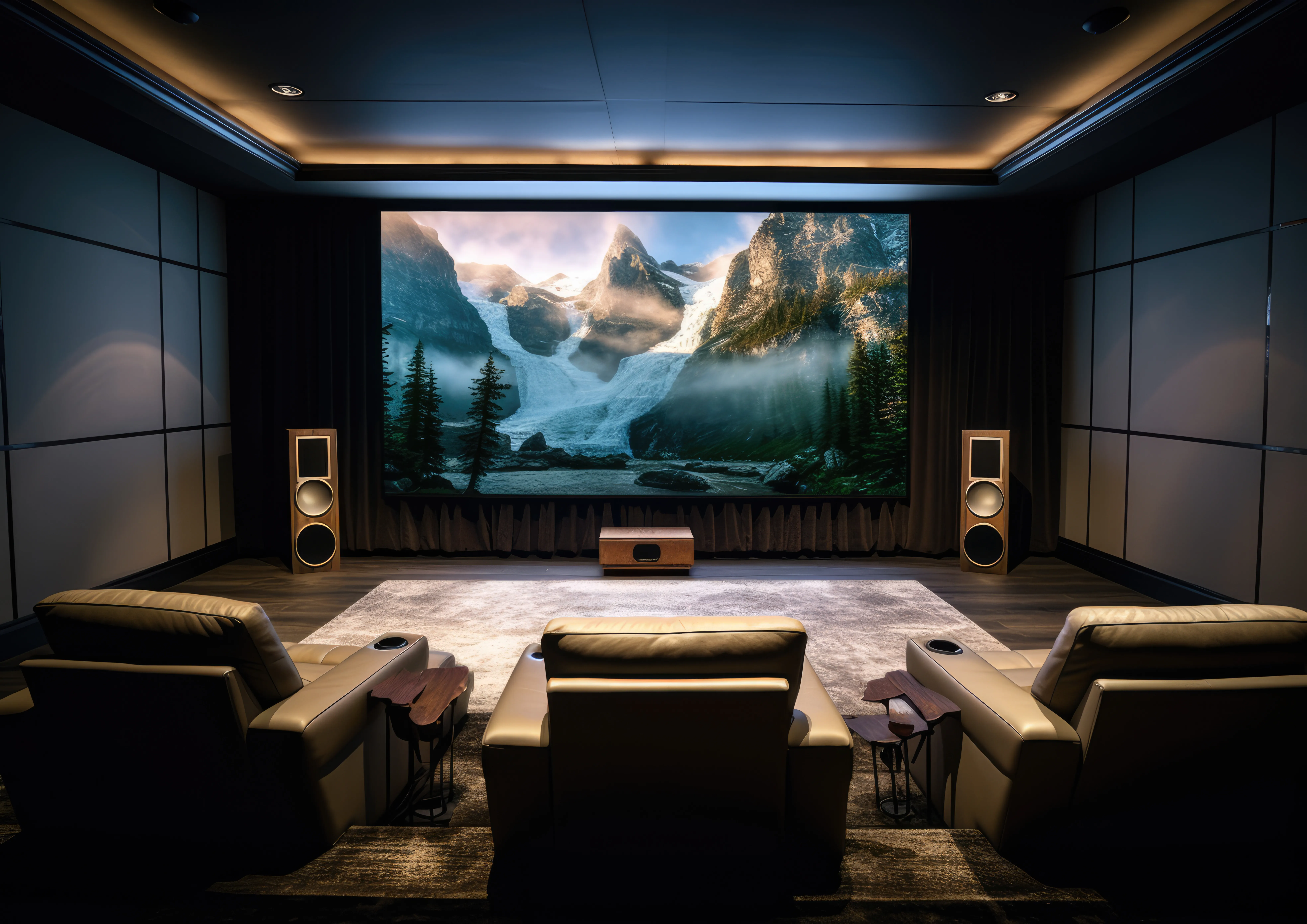
In a dedicated dark-room home theater, these displays can deliver cinematic punch with lifelike color volume and deep blacks that rival or exceed current OLEDs in brightness-heavy scenes.
Remaining Challenges and Limitations
Despite the hype, hurdles remain:
For 8K:
- ● Very limited native content.
- ● High cost with diminishing returns on most screen sizes and viewing distances.
- ● Processing demands are intense.
For Micro-LED / RGB Mini-LED:
- ● Still premium pricing (especially larger sizes).
- ● True self-emissive Micro-LED remains expensive and mostly modular/wall-sized.
- ● Marketing claims (e.g., full BT.2020) are sometimes optimistic — real-world performance depends on implementation.
- ● Power consumption can be higher on very bright models.
For average living rooms, well-implemented OLED or high-end Mini-LED may still offer the best value.
What Should Home Cinema Buyers Do in 2026?
If you want maximum immersion today:
- ● Consider a high-end RGB Mini-LED or Micro RGB TV in 85"+ for bright, colorful HDR performance.
- ● Pair it with a quality AV receiver, speakers, and controlled lighting.
For true large-scale cinema:
- ● Look at modular Micro-LED solutions (like LG MAGNIT-style systems) or premium 4K/8K laser projectors on a large screen.
Future outlook:
- ● Expect Micro RGB technology to become more affordable and refined over the next 2–3 years.
- ● True consumer Micro-LED TVs (self-emissive, smaller sizes) will likely follow as manufacturing scales.
- ● 8K may remain niche — best suited for projectors or ultra-enthusiast setups with future content growth.
Final Thoughts
In 2026, the future of home cinema is not purely about chasing more pixels (8K). It's about better overall picture quality — brightness, color accuracy, contrast, and reliability. Micro-LED and RGB Mini-LED advancements are delivering meaningful improvements that enthusiasts can actually see and appreciate during movie nights.
If you're planning a new setup, focus first on room calibration, acoustics, and content sources. The display technology will continue evolving rapidly.