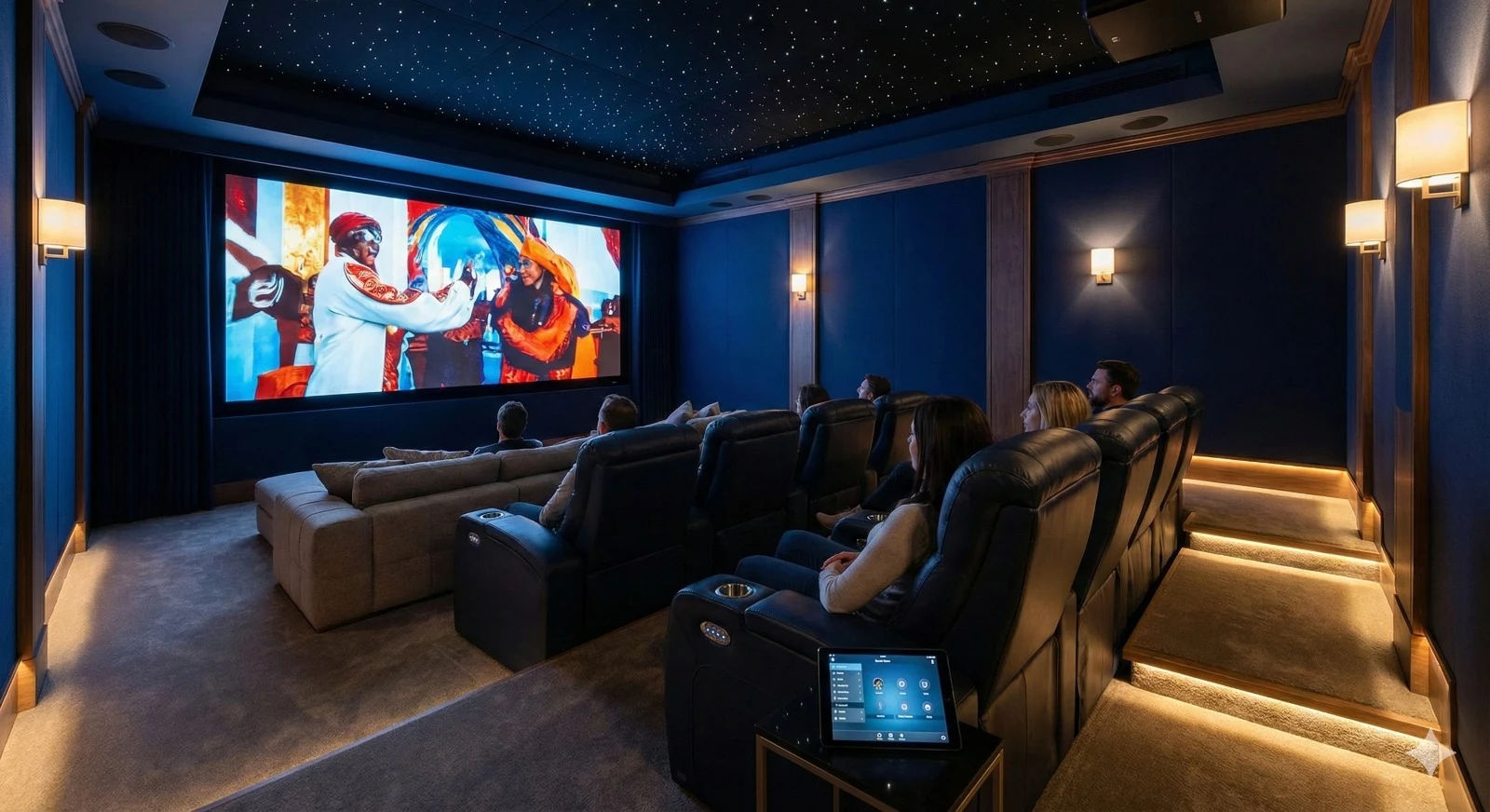
1. Optimize Your Black Box (Light & Sound)
The biggest enemies of a cinema experience are windows and echoes.
- ● Light Control: Use "Blackout" cellular shades or heavy velvet curtains. If your room has glass doors, consider adding a window film to reduce reflections.
- ● Sound Absorption: Hard floors and bare walls reflect sound, making it "muddy." Add a plush area rug and consider Acoustic Wall Panels. Modern panels now come in wood-slat or fabric designs that look like high-end decor.
2. The Visuals: Calculating the Sweet Spot
In 2026, the debate between high-end OLED TVs and 4K Laser Projectors is closer than ever.
Screen Size vs. Distance
Don't guess your screen size. Use the THX Recommendation: Multiply your seating distance (in inches) by 0.835 to find your ideal diagonal screen size for a 40-degree field of vision the same immersive angle you get in a premium commercial cinema.
- ● Laser Projectors: Best for screens over 120 inches. Modern ultra-short-throw (UST) projectors sit just inches from the wall, making them perfect for smaller rooms.
- ● Micro-LED/OLED: If your room isn't pitch black, a 98-inch OLED provides infinite contrast and "perfect blacks" that projectors can’t match in ambient light.
3. The Soundscape: Moving Beyond Surround Sound
A standard 5.1 system is the "entry-level" of home cinema. For the ultimate experience, you need Spatial Audio (Dolby Atmos).
- ➔ The 5.1.4 Configuration: This is the gold standard for residential rooms. It includes:
- ● 5 Speakers at ear level (Center, Front L/R, Surround L/R).
- ● 1 Subwoofer for LFE (Low-Frequency Effects).
- ● 4 In-ceiling speakers to provide the "height" dimension.
- ➔ Subwoofer Placement: Bass is non-directional, but "dead spots" are real. Placing your subwoofer in a corner can amplify volume, but placing it at the midpoint of a wall often results in smoother, more accurate bass. In larger rooms, dual subwoofers are recommended to ensure every seat feels the rumble equally.
4. Acoustic Treatment: The Silent Hero
Even the most expensive speakers will sound terrible in a room with bare walls. Acoustic treatment is about controlling reflections.
- ● Primary Reflection Points: Use the "Mirror Trick." Sit in your main seat and have someone slide a mirror along the side walls. Wherever you see the reflection of a speaker, that is a primary reflection point. Place an absorptive acoustic panel there.
- ● Bass Traps: Low-frequency energy gathers in corners. Thick, triangular "bass traps" in the corners of the room prevent the bass from sounding "boomy" or lingering too long.
- ● Diffusion: On the back wall, use diffusers irregularly shaped panels that scatter sound waves rather than absorbing them. This makes a small room feel much larger and more "airy."
5. Ergonomics and Seating
If you aren't comfortable, you won't use the room.
- ● Tiered Seating: If you have two rows, the back row needs a "riser" (platform) about 30–40 cm high. This ensures the back row has a clear line of sight over the heads of those in front.
- ● Eye Level: The most common mistake is mounting the screen too high. Your eyes should be level with the bottom third of the screen when you are reclined.
- ● Material: Choose dark, non-reflective fabrics like leather or microfiber. Avoid shiny materials that will catch the light from the screen.
6. Lighting Design: Scene Setting
Lighting should be divided into three layers:
- ● Task Lighting: Bright recessed LED downlights for cleaning or navigating the room.
- ● Ambience: Dimmable wall sconces or "cove lighting" (LED strips hidden in the ceiling crown) to create a warm glow before the movie starts.
- ● Bias Lighting: A soft LED strip placed behind the screen. This reduces eye strain by providing a "halo" of light, preventing your pupils from constantly dilating as the screen moves from dark to bright scenes.
7. The Smart Core: Integration
The ultimate theatre experience is one-touch. Using a smart home hub (like Control4, Savant, or a DIY Home Assistant setup), you should be able to press a Movie button that:
- ● Slowly dims the lights to 0%.
- ● Powers on the projector and receiver.
- ● Sets the AC to a whisper-quiet "Cinema Mode."
- ● Closes the blackout curtains.
Summary
- ● HDMI 2.1: Ensure all your cables and ports support 48Gbps for 4K/120Hz gaming and movies.
- ● Concealed Wiring: If you are building from scratch, run 2-inch conduits behind the walls so you can easily upgrade cables in the future.
- ● Ventilation: AV receivers generate immense heat. If you hide your gear in a cabinet, install an active cooling fan.
Building the ultimate home theatre is a marathon, not a sprint. Start with a solid room and a high-quality 3.1 sound system (Center, L/R, and Sub), and expand into Atmos and acoustic treatments as your budget allows. When done right, your home will become the most popular destination in the neighborhood.